

Funds of Knowledge Video
Learn how to gather and use the funds of knowledge for children and families in the classroom. This approach will help staff ensure culturally relevant programming.


Official websites use .gov
A .gov website belongs to an official government organization in the United States.

Secure .gov websites use HTTPS
A lock
()
or https:// means you’ve safely connected to the .gov website. Share sensitive information only on official, secure websites.
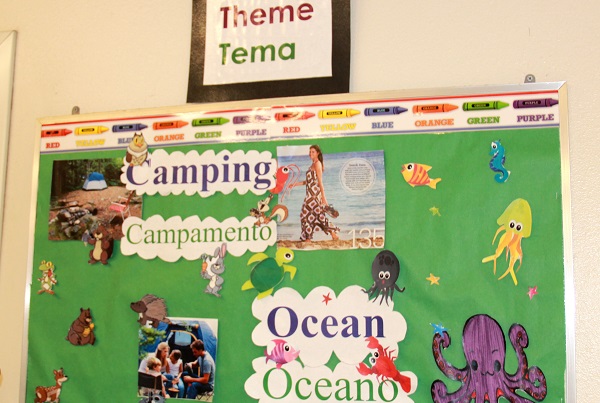 These resources offer information and guidance on the needs of children who are acquiring two or more languages at the same time or are learning a second language while developing their first. Besides dual language learner (DLL), other terms that resources may use when referring to these children include bilingual, English language learner (ELL), Limited English Proficient (LEP), English leaner, and children who speak a Language Other Than English (LOTE).
The Policy Statement on Supporting the Development of Children Who Are Dual Language Learners in Early Childhood Programs provides recommendations to early childhood programs that promote the development and learning of young children who are DLLs. It also provides support for language revitalization efforts within tribal early childhood programs.
Find related DLL program assessment resources.
Learn how to gather and use the funds of knowledge for children and families in the classroom. This approach will help staff ensure culturally relevant programming.
In this brief video clip from The Office of Head Start Discovering Science Webcast Series, Dr. Patton Tabors, a dual language learning expert, describes what teachers may do to support science learning for children who speak different languages.
This resource highlights strategies discussed in the Head Start Science Teacher's Guide that teaching teams may use to help children learn their home language in addition to English. Teachers are encouraged to focus on language and literacy skills as integral to the exploration of science topics in the natural world. Specific suggestions from the Guide provide evidence-based practices that are effective for working with dual language learners in Head Start programs.
During the course of a child’s life, change is inevitable. Families move, siblings are born, school begins and, consequently, transitions happen. Knowing about children’s development can help us understand how children respond to transition. In addition, when program staff collaborate with families, they can learn how individual children experience change. Staff can also learn how to help children feel secure and comfortable during transition.
Learn strategies to communicate and collaborate with other ECE programs, elementary schools, and community stakeholders. This brief identifies ways programs can promote continuity between programs.
Watch this presentation about the Planned Language Approach support to planning and implementing high-quality language and early literacy services in all classrooms and for all children.
Discover ways promote a program-wide coordinated approach to supporting dual language learners and their families.
Explore typical bilingual development in the early years and learn what it means to assess children who are dual language learners.
Learn about ways to check your program’s progress in meeting a coordinated approach to serving children who are dual language learners (DLLs) and their families.
Explore this resource guide to help training and technical assistance providers implement the Planned Language Approach’s Big 5. Use the series in professional development, coaching, and peer learning communities.

HeadStart.gov
official website of the Administration for Children and Families